

Sowing By Grace
Witnessing God at work!
JULY 2026
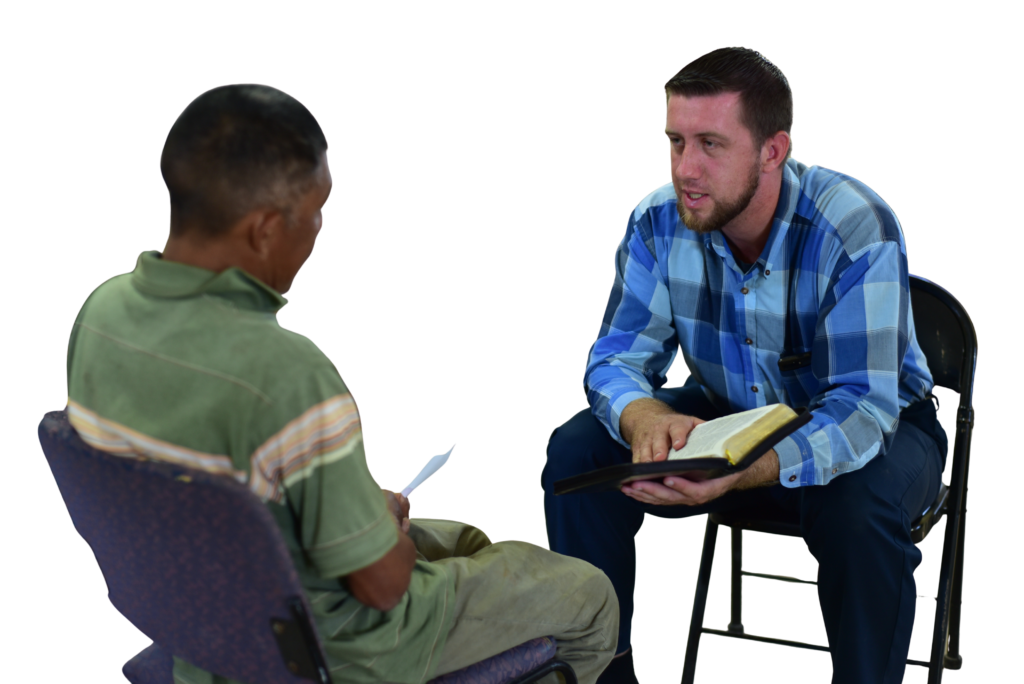
Church Planting
ADAM POLK
Missionary church planter in Senora, Mexico
I’m entirely convinced that I am not the one who should be writing this article, as my experience in church planting is still yet very limited, but I am grateful for the opportunity to share these thoughts. Many years ago, I assisted a pastor with a church plant in Hermosillo, but as the primary “church planter”, the church I am currently pastoring is my first one.
I will take for granted that we all understand the need to pray much more than we do for our ministries, and to depend upon the Holy Spirit’s leading in ministry and in life, generally speaking. Aside from those extremely crucial things, I think one of the most important things I have learned during my short time as a church-planter is to pay real close attention to the culture of the place where the church is being planted. I am unaware of how this works in other countries, but here in Mexico there is a general “Mexican culture”, but inside of that culture, there are countless “sub-cultures” which one must heed to. Simple example: I grew up in a fundamental Bible church and have been serving in Bible and/or Baptist churches both in the U.S. and in Mexico for most of my life. That means that to preach or participate in any ministry you must wear a suit and tie (I’m exaggerating, but only slightly). Here in Moctezuma, which is a sub-culture being a small town, the most important person, the mayor, dresses in jeans, and cowboy boots. In other words, I have not worn a tie to any service since we’ve been here. Another example: Pastoral visits in big cities, even here in Mexico, usually last 20 minutes or so on average. You have to move fast to get to your next visit. Here in Moctezuma, however, if you leave after an hour and a half, the people ask why you’re leaving so soon!
Short Anecdote: This past Mother’s Day, we had a special service to celebrate all the moms. On the invitation, we said that there would be a gift for each mom present and a meal for everyone after the service. Praise the Lord, we had 19 moms present that day, about half of them were first or second-time visitors. The normal practice, at least for churches here in Mexico, is to introduce the first and second-time visitors so the church can know their names and so as to give them a hardy “welcome”. I forgot that we were in a small town where everyone knows everyone, and where we are the real “visitors”. So, I had all the moms stand up and introduce themselves. Then while they were all saying their names, I thought to myself, “you dummy, you’re the one who should’ve introduced yourself. They all already know who everyone else is!” One of the ladies while introducing herself even made a sarcastic comment saying “no one knows who I am, right?” It was a learning experience for me, and next time, I’ll be the one to introduce myself!
Summary: As church planters, we must be aware of the people around us and become like them, in all areas that are not sinful. It is not a sin to start at 10:20 when the sign says we start at 10:00! Paul said it this way, “I am made all things to all men, that I might by all means save some.” 1 Cor. 9:22
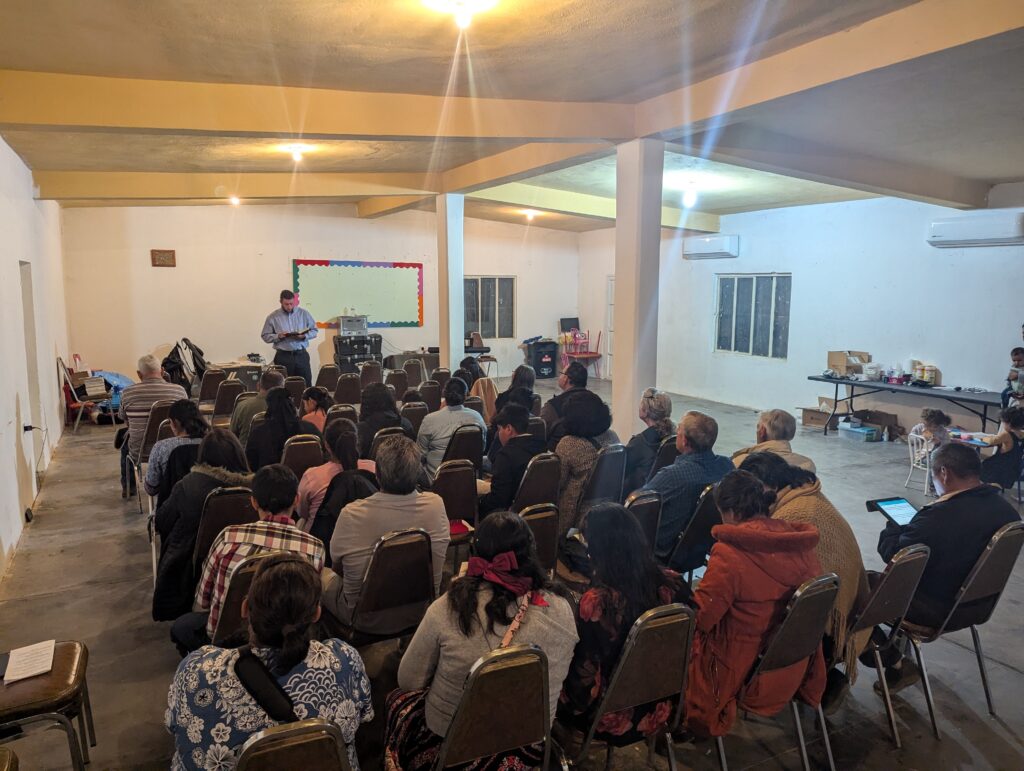
Suggestion: No matter where you are ministering at, whether it’s a big city, a small town or an entirely different country, find out what works best for the place you’re at, and do that. There are very few specific guidelines in the Bible as to how a church is to be planted and how a church is to function. Another very quick example: We don’t pass the offering plates at a specific time in the service (WHAT???). We just have a lock box where anyone at any time before, during or after the service can put their offering in. There are a couple of specific reasons why we decided to do it that way, which I won’t get in to now.
As far as reaching people with the Gospel goes, we also don’t have “evangelism”. By no means am I against a set time each week where the church gathers together to go door-knocking. But, the few times we did it here in Moctezuma, it proved to be very ineffective, and while I won’t say it was a waste of our time, it definitely wasn’t the best use of our time. Here in Moctezuma, and in almost every small town and village here in Mexico, you win people by first becoming their friend. We do preach the Gospel each Wednesday in the town square using a mic and two speakers that reach the entire town square, the many businesses surrounding it (including the Catholic church), and about one street in each direction outside of the town square. In other words, each Wednesday, many people hear a clear presentation of the Gospel. Another ministry that is beginning to show fruit is our kids’ Bible Club each Friday evening. We average 10-15 kids, and through those kids, we have been able to evangelize some of their parents and family members. One adolescent girl from the kids’ club has been coming to church faithfully for a few months now, and her parents and two older siblings are beginning to come as well. Her mom made a profession of faith a few weeks ago, praise the Lord!
Thank you for taking the time to read this article. May the Lord help each one of us to remain faithful to him in the places where He has led each of us to serve Him!
Healing the Body, Reaching the Soul
Jared Bell
The Healing Touch: Why Medical Missions Matters
What is Missions? Missions is the work of sharing the gospel of Christ across the nations for the purpose of building His church. We typically think of missions in the sense of Christians being sent to go to a location that they are not from, preaching the Gospel of truth to people who do not already know, and working to establish a church in a place that is without (Romans 10:13–15). This is the blueprint for modern mission work, but what do missionaries do when they go to a people or a place that are hesitant to hear the message they bring? What do you do when you try to invite your unsaved family, friends, and neighbors to church or to tell them about the truth you hold most important? It seems to all come back to relationships. People want to see that you genuinely care for them and their needs before they are willing to listen to the message you want to share. And so, just as you have to show those around you the love of Christ before many will be willing to listen, missionaries also need to find ways to share their burden and care with their communities to be an effective witness. One of the most tangible ways to demonstrate this Christ-like compassion is through medical missions.
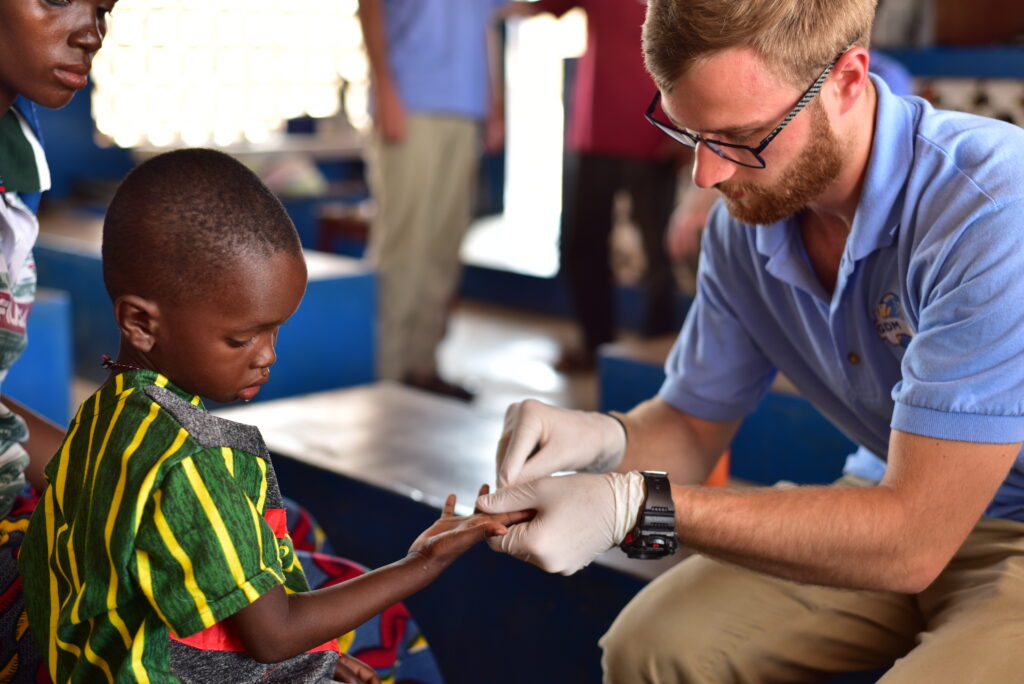
Every year, medical and dental teams pack up mobile gear, basic meds, and with a lot of prayer are sent to remote corners of the world. On the surface, the goal is obvious: pull a tooth, treat an infection, or hand out reading glasses to meet an immediate physical need. But as believers doing our work to advance the kingdom, the vision goes so much deeper than temporary physical relief. By stepping in to care for the body, these teams are opening doors for church planting that might otherwise stay firmly shut.
Mimicking the Ministry of Christ
We don’t have to guess if this approach works; it’s the exact model Jesus gave us. Throughout the Gospels, preaching the Kingdom and healing the sick went hand in hand. Look at Matthew 9:35:
“And Jesus went about all the cities and villages, teaching in their synagogues, and preaching the gospel of the kingdom, and healing every sickness and every disease among the people.”
Jesus frequently used physical healing to show the tangible, real-world compassion of God. When He sent His disciples out in Luke 10:9, He didn’t just tell them to preach. He said: “And heal the sick that are therein, and say unto them, The kingdom of God is come nigh unto you.” Medical missions follow this exact same dual mandate. We treat physical pain as a bridge to talk about spiritual truth.
Backed by Missions History
This isn’t a new strategy, either. Modern medical trips stand on a rich history of missionaries who realized that a healing touch can break down barriers. In the 1800s, Dr. David Livingstone’s medical training allowed him to access regions in Africa that were completely closed off to outsiders, paving the way for the Gospel. Around the same time, Dr. Peter Parker became the first Protestant medical missionary to China, opening an eye hospital in Canton. It was famously said that he “opened China to the gospel at the point of his lancet.” Where standard preaching was met with skepticism, the unconditional kindness of medical care won the trust of the community.
Making a Lasting Impact
The real value of medical and dental missions today isn’t just about the numbers we treat during a two week-long trip. It’s about how these clinics support the long-term health of the global Church. Every mobile clinic is done in close partnership with local, indigenous church plants.
A tooth extraction or a bottle of medicine relieves pain for a season, but the relationships built and the local churches strengthened through that care can transform a community for eternity. When we support, pray for, or join these teams, we’re stepping right into Christ’s ongoing ministry: showing His heart to the nations, one person at a time.
And whatever you do, in word or deed, do everything in the name of the Lord Jesus, giving thanks to God the Father through him.
Colossians 3:17
Troubled in Malawi
Bryan Bell
“Nobody knows the trouble I’ve seen, Nobody knows my sorrow… Nobody knows the troubles I’ve seen, Nobody knows but Jesus.” Millennia before Louis Armstrong popularized those words the Preacher shared this observation: “there is a time and a way for everything, although man’s trouble lies heavy on him” (Eccl. 8:6 ESV). Our world is full of trouble, and indeed that trouble, and consequent sorrow, “lies heavy”.
I grew up as an MK in Central Africa in the ‘80s and ‘90s, my wife and I served in Southern Africa in the early 2000s, and for the past 20 years I’ve been on the frontlines with our medical teams serving poor and troubled people. I’m no stranger to seeing hurting and destitute people. Each of our teams comes back with stories that pull on your heart and make you cry out, “Enough is enough; come, Lord Jesus.” And yes, He is the only true and eternal answer; the only true hope for the troubled.
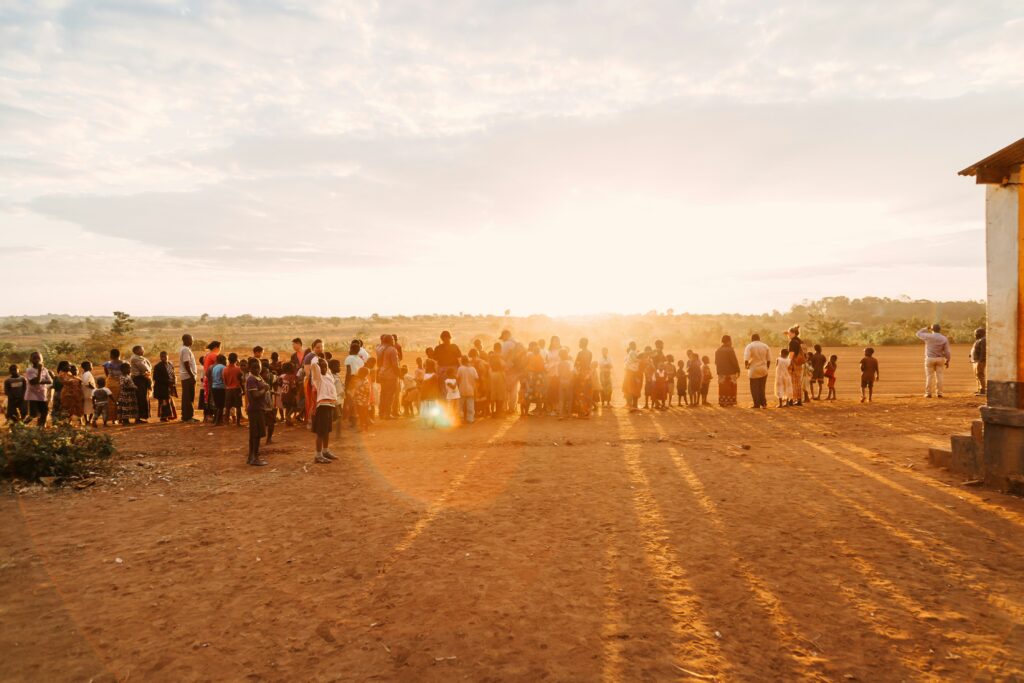
A few months back, I had the opportunity to travel to Malawi with a friend who’s been investing in ministry there by engaging with various church-building projects, supporting orphans, and a program to help heal, house, feed, and educate teenage moms who have experienced abuse and abandonment. Medical needs among the orphans and the potential to assist national churches with effective gospel outreach through medical missions are what brought me. Surveys like this have been part of my role, and something I have enjoyed; something that distracts me from the trouble, something that reminds me we have an answer.
Being welcomed into a small, remote village with song, dance, and the quoting of scripture by fifty children (half of them orphans) would soften the toughest of hearts. I was certainly refreshed to see these children, who had lost everything, thriving and learning about Jesus. It was also a wonderful blessing, as it always is, to worship with brothers and sisters of another culture and language – it never gets old. The heart always warms when you can see Jesus’s promise to build His church being taking shape in places previously unfamiliar.
But my heart was deeply troubled to see the faces and hear the stories of young ladies who have faced unspeakable abuse, trauma, and betrayal, often at the hand of family members. At thirteen, fifteen, seventeen (and every age between) they are mothers, they are castaways, they are broken; many of them runaways from situations and people that enslaved and hurt them. They are children, abused and abandoned by their parents, who now face the impossible odds of supporting themselves and their own children. They are smart young ladies whose hopes for safety, dignity, connection, education, and a future have been utterly crushed. For these young ladies, their trouble lies heavy indeed. My friend’s ministry helps provide funding for housing, basic needs, and education. They also provide a spiritual and emotional support structure that is so vital.
The handful of ladies I met are a minuscule representation of the thousands upon thousands of such cases across Malawi, Africa, and the world. As a mission, we are considering how we can help in a meaningful way. We know Jesus knows their trouble, and we know Jesus is the answer to that trouble. Missions, missionaries, and pastors everywhere face these types of situations but often can’t talk about them. Pray for us, pray for your missionaries, pray for national pastors and workers that they will have wisdom and resources to meet needs like these.
“Pure religion and undefiled before God and the Father is this, To visit the fatherless and widows in their affliction, and to keep himself unspotted from the world.” (James 1:27 – KJV)
SERVICE RESOURCES
Follow Us
© 2026 GDMMISSIONS